

Leasehold Risks And Opportunities
 By Lisa Scontras
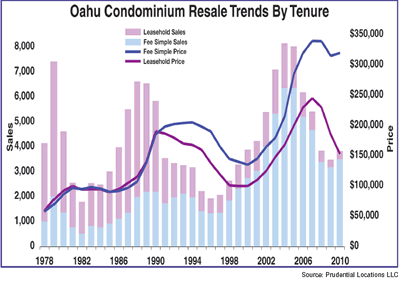
After World War II, demand for homes in Hawaii increased significantly prompting major landowners to begin building large housing developments. Landowners were able offer homes for sale at reduced prices by retaining ownership of the land beneath the home. Buying “leasehold” meant a more affordable price tag, and with long leases and fixed lease rents there were no real downsides to buyers.
“By leasing the land under the house for periods of up to 50 years or more, it was a win-win situation,” says Norman Banta, Realtor at Prudential Locations. “The new homeowners were able to afford the leasehold prices while the landowners retained the rights to the land.”
But while Hawaii’s residential land leases of the 1950s may have started out at $20 per month, land values and rents appreciated at rates nobody could have foreseen.
“What started out as a good idea turned sour when the price of land started moving north,” says Banta. “The landowners had usually fixed the lease rent for the first 30 years of the lease, precluding them from participating in any earnings appreciation.”
In the years that followed, as lease rents were renegotiated, monthly lease payments often increased dramatically as the landowner brought the rent up to current market value. As a result, many homeowners were forced to vacate their homes when the lease rents suddenly became unaffordable.
“Today, buying fee simple is, of course, the preferred way of holding title,” says Banta. “It is the most complete form of ownership – both the land and the building – allowing the owner to occupy, use and dispose of the land as he sees fit.”
But despite the facts that leasehold ownership is restrictive, and the use of the land is limited by the number of years remaining on the lease, Banta says there are surprisingly some good leasehold buys out there.
“A case in point is the Waikiki Skyliner, a high-rise condominium in Waikiki,” says Banta. “The lease expires in 2058 and the monthly lease rent is only $28, fixed over the life of the lease. And because the units are leasehold, they are being offered at significant discounts to a comparable fee simple unit.”
Another popular lease-hold building is the Kahala Beach Apartments, especially among people who have always dreamed of living by the beach but couldn’t afford it. Banta says these units do provide a more reasonable alternative.
“Owning that dream is
temporary, however, as the lease terminates in 2027,” he says.
Buyers considering a leasehold purchase should ask these questions:
1. Do I need financing in order to purchase the property?
2. How long is the lease?
3. What is the current lease rent?
4. When is the lease rent renegotiated?
5. What is my contingency plan should I be asked to vacate the unit at the end of the lease?
Prospective buyers should also ask about buying the rights to the land, thereby buying the fee, or converting the leasehold property to a fee simple property. If the landowner is prepared to sell the fee, that information should be disclosed.
“Leasehold properties are not for everyone, but in certain cases can make for smart investment decisions or provide the necessary affordability for some-one’s lifelong dream,” Banta says. “Buyers need to understand the terms of the lease in its entirety before proceeding. An experienced Realtor can help with the task.”
See More Listings