

Keeping ohana close
ACCESSORY DWELLING UNITS OFFER HOPE FOR STRUGGLING FAMILIES
By Lisa Scontras
Among the most heartbreaking of pandemic-related stories unfolding are the hundreds of thousands of people who have shuttered their businesses, and lost their jobs or income sources. But when it’s our friends and families who are struggling to pay bills and put food on the table, the pandemic’s economic turmoil hits closer to home. Meeting the challenges that face us requires a collaborative effort and some creative solutions.
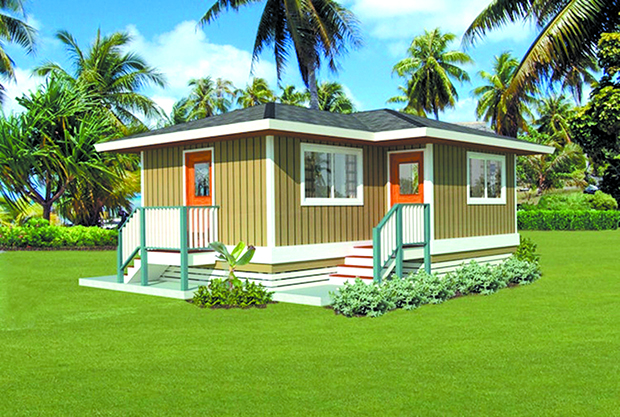
One such solution — for single-family homeowners in particular — is to add an accessory dwelling unit. Basically, an ADU is a second home that is added to a single-family home homesite. These “little homes†are especially suited for adult kids or kupuna, or can be rented out as a simple way to generate some supplemental income — all while maintaining social distancing guidelines. To be eligible, home lots must measure at least 3,500 square feet and meet City and County of Honolulu zoning requirements. In addition, the property owner must reside on the property. (For more details, see the links in the sidebar.)
ADUs originally gained popularity as low-cost rentals in cities around the country as a way to offset the shortage of affordable housing. But in today’s challenging world, these eco-compact living spaces, complete with kitchen, bathroom and sleeping areas, may offer an out-of-the- box solution to those particularly affected by the current economic downturn. The compact homes are attached or detached from the main house, and include a lengthy list of options regarding design and décor. The homes are amazingly innovative, yet affordable, and present an excellent opportunity to bring ohana together.
“Accessory dwelling units are a great way to keep ohana close or offset mortgage/or any expenses with rental income,†says Jo Frasier, Realtor and partner at Locations. “These units can also increase your home’s value, if properly permitted.â€
There are many options for start-to-finish ADU construction in Hawaii. One of the most popular methods are the ADU kits, which are basically prefabricated modular homes.
Kits can be purchased at Hardware Hawaii, where prices range from $27,500 for the Hale Lii model (includes one bedroom, one bathroom and 400 square feet) to $55,600 for the Waimanalo model (two bedrooms, one bath and 800 square feet). (Any labor costs are additional.) For more information, visit hardwarehawaii.com/adukit- homes.
Or, several local homebuilders, including Homeworks and HK Construction, will build one for you. Frasier advises that before getting started, to check the title to the property.
“A larger lot does not automatically mean you can add an ADU,†she adds. “There may be long-standing covenants on the title that restrict the property’s use to ‘only one single-family dwelling.’ Be sure you get all the details before you contract an architect or during the due diligence period in the purchase contract.â€
Whether the owner opts to use their ADU to downsize, house family or rent for additional income, the separate living area may offer hope to families looking to share or offset expenses.
ADU Resources
List of ADU resources, includes custom builders and financing:
hawaiiadu.org/resources/helpful-contacts
Locations ADU overview:
locationshawaii.com/learn/investing-in-real-estate/adu-accessory-dwelling-unit-info-for-homeowners
HawaiiADU handbook for comprehensive information and basic requirements:
hawaiiadu.org/wp-content/uploads/2016/03/HawaiiADU-Handbook.pdf