

All Real Estate Is Local
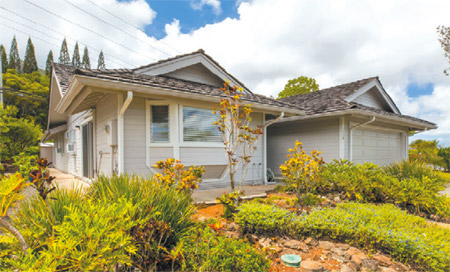
If you’ve seen any of those articles comparing what a million-dollar home looks like in different cities around the country, or been tempted by the bang for the buck in Las Vegas properties, it quickly becomes clear that real estate is local — wherever you are. Market conditions on Oahu with our finite amount of land on which to build, costly construction, year-round sunshine, and the international appeal of living in a tropical paradise, make homes here some of the most expensive in the world.
But even within the local Oahu market, different neighborhoods have unique demographics and are influenced by their own set of distinct market conditions and characteristics.
“While the real estate market on the island moves together over a longer period of time, in the short-term, each neighborhood behaves differently,” said Kalama Kim, principal broker at Coldwell Banker Pacific Properties. “This is due to different buyers being attracted to different neighborhoods for various reasons. For example, the Ko Olina market draws second home buyers, the Kahala market draws affluent buyers, and the Kapolei market draws first-time buyers. Each market moves a little differently because those buyers are motivated by different factors.”
The Honolulu Board of Realtors’ monthly reports paint a broad market picture with median sales prices and median sales volume. But hidden in these statistics is the fact neighborhood to neighborhood data may vary dramatically — some neighborhoods are sluggish, while others thrive.
In August, for example, HBR reported that on Oahu, the median sales price was down 2.5 percent, while sales volume was up 1.7 percent. Yet for the Ewa Plain — which includes Ewa, Westloch and Kapolei — single-family homes were up 17.6 percent, while prices were down 0.7 percent. Kaneohe sales were up 57.9 percent, though prices were down 8.2 percent. Yet, in Hawaii Kai, single-family sales were down 30 percent, and prices there also dropped 24.8 percent. Condominium sales on the island were reported to be down overall 8.8 percent, while the median price was up 4 percent. But again, neighborhoods varied significantly. In Hawaii Kai, sales were up 35.7 percent, while prices fell 10 percent.
And in Kaneohe, the opposite was true — the number of sales were down 35.7 percent, and prices were up 15.6 percent.
If you’re considering selling your home or condo, it’s important to understand this real-estate-is-local concept. While island-wide stats are regularly quoted, what is happening in your neighborhood may be a different story.
Based on August sales data, Ewa Plain had the highest single-family sales volume. Kaneohe had the most dramatic increase in single-family sales volume, compared to 2018. And Makakilo had the biggest bump up in single-family median sales prices — from $702,500 in August 2018, to $754,000 in August this year. Homes sold the fastest on the North Shore and in Mililani.
In the condo segment, Waipahu had the most dramatic increase in sales volume, compared to 2018. Condos sold fastest in Mililani. And condo prices increased most in Kaneohe, up 15.6 percent, from $514,500 in August a year ago, to $595,000 in this past August.
See More Listings